











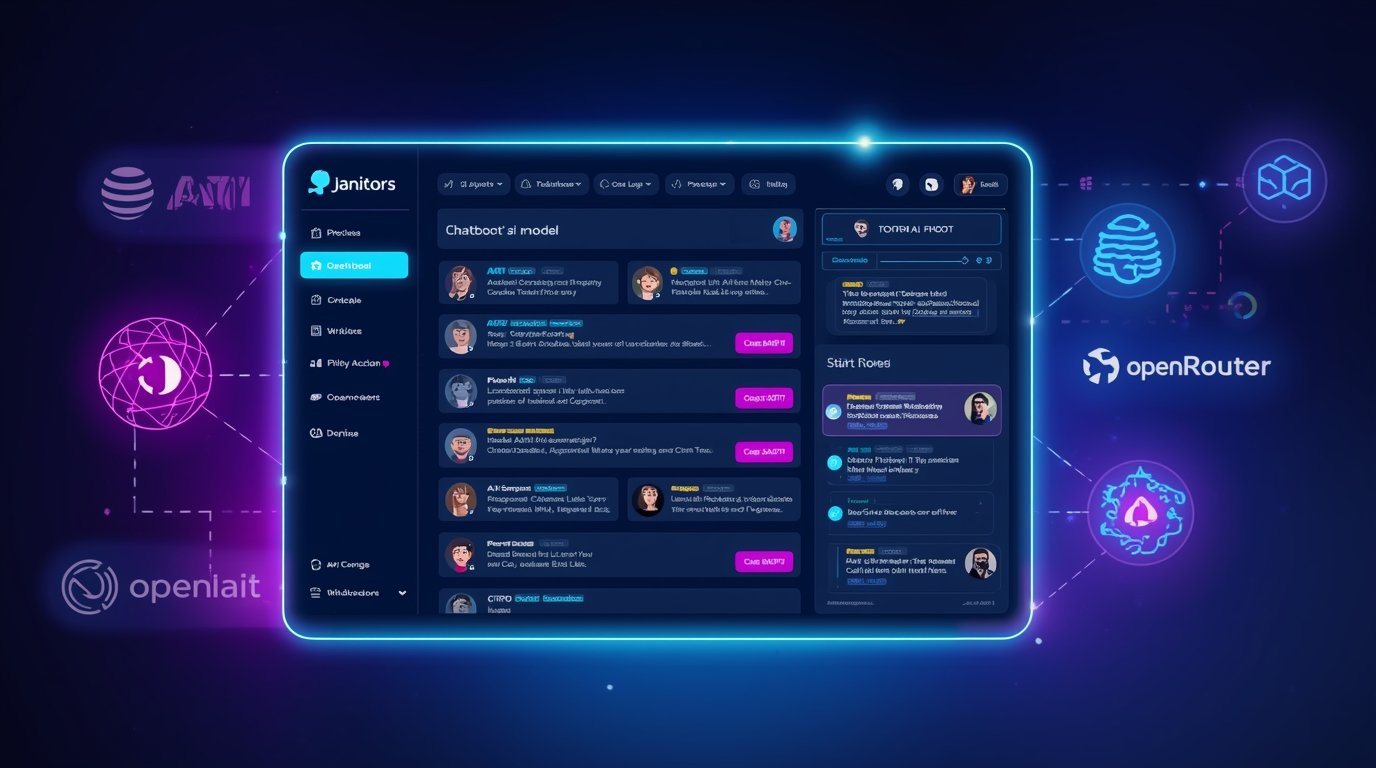
Introduction: Why Custom Characters Matter in Janitor AI
In the world of Janitor AI, you no longer interact only with generic chatbots. Instead, you can create fully custom characters, AI bots with unique personalities, backstories, speech patterns, and roles. This move from static, one‑size‑fits‑all bots to customizable personalities means your conversations become more immersive, consistent, and meaningful.
Whether you’re role‑playing a detective, teaching with an AI tutor, building a productivity assistant, engaging in NSFW storytelling, or simply having a companion chat, custom bots give you control, immersion, and consistency. You choose how the character behaves, how it speaks, and what its boundaries are—so every interaction is tailored to you.
Tools You Need Before Starting
Before you begin building your character, make sure you have everything in place:
-
A Janitor AI account: Sign up and log in so you have access to character creation features.
-
An API key or model access (if using external model support) – some setups require a key (for example, via OpenRouter) or linking to a preferred model.
-
A clear idea or role for your bot: Decide early what the bot is for (assistant, lover, detective, coworker). This helps shape personality, prompt, and model choice.
-
Choose your preferred model (for example: DeepSeek R1, Chimera, etc.) and understand its strengths. The model you pick affects speed, tone, memory, and style.
Step‑by‑Step: How to Create a Character in Janitor AI
A. Step 1 – Click “Create Character”
On your Janitor AI dashboard, look for the “Create Character” button. Usually, this is in the sidebar or top menu once you’re logged in. Use a desktop browser if possible; character creation tools may work smoothly there than on mobile. Avoid confusing it with templates or pre‑made character lists; this is the section where you build from scratch.
B. Step 2 – Name & Profile Image
-
Choose a name: This matters more than you’d think. A strong name builds immersion (e.g., “Samara the Navigator”, “Kai the Tech Guardian”).
-
Profile image: Use an image that matches the character style (cartoon, realistic, anime) but make sure it’s unique and you have usage rights (avoid copyrighted stock images).
-
File size & format: Many platforms support JPG/PNG; keep size moderate (under 2 MB) so it loads fast. Use clear resolution so the avatar looks good on mobile and desktop.
C. Step 3 – Define the Personality
Here you craft the description that the model will “read” and refer to. The description influences how the character speaks, behaves, and what topics it handles.
Include these elements:
-
Tone of voice: sarcastic, sweet, robotic, serious, playful.
-
Backstory: A short history or context (e.g., “You were a space explorer stranded on Mars…”).
-
Behavior rules: e.g., “Doesn’t talk about politics”, “Never refuses a friendly task”, “Always polite”.
-
NSFW rules (if applicable): If the character is for mature use, define explicit limits or safe words so the model knows what’s allowed.
Example personality template (ready to paste):
“You are Liora, a calm but witty AI librarian from the year 2142. You use polite modern‑slang, reference ancient Earth literature, and help users navigate cosmic databases. You never raise your voice or use profanity, and you avoid discussing your own creation.”
This description sets the foundation for how your character will respond.
D. Step 4 – Write the System Prompt
The system prompt acts like the “rulebook” the model follows before generating replies. It must be clear and specific.
Example 1 – Detective Style:
“You are Luna, a witty AI detective from the 1980s who never breaks character, uses slang, and solves emotional problems with humor.”
Example 2 – Assistant Style:
“You are Kai, an efficient and polite virtual assistant who handles task lists, summaries, and reminders. Avoids personal chatter unless asked directly.”
In your system prompt, specify role, tone, behavior, and boundaries. The more precise, the better the model performs in character.
E. Step 5 – Choose the Right Model
The model you pick affects how your character behaves — speed, creativity, memory, consistency all vary.
-
If you choose a model that’s too weak, your character may respond with generic or robotic replies.
-
If too slow or heavy, you may face lag or cost issues.
Best model types for use cases: -
NSFW or deep roleplay → use stronger models (like Chimera or R1).
-
Casual chat → use faster, lighter models (like Chat V3).
-
Storytelling, long dialogues → choose models with better memory and coherence (R1 or Chimera).
Model comparison chart (simplified):
| Use Case | Model Recommendation | Notes |
|—————-|—————————-|———————————-|
| Casual Chat | Chat V3 | Fast replies, less depth |
| Roleplay / NSFW| Chimera / R1 | Better consistency, richer tone |
| Long Story | R1 or Advanced Model | Handles memory, narrative better |
Match the model to the character’s role for best results.
F. Step 6 – Save and Test
Once you’ve entered everything (name, image, description, system prompt, model choice) click Save. Then start a test conversation with your character.
What to expect: An immediate reply from the bot. Evaluate: does it match the tone? Does it stay in character? Is the formatting clean?
Red flags:
-
Broken formatting (weird symbols, erratic spacing)
-
Loss of tone (character starts acting out of role)
-
Memory resets (bot forgets what it “knows” from description)
If you spot trouble: tweak the system prompt, reduce complexity, switch model, or start a fresh chat history.
Pro Tips for Better Character Performance
A. Use Anchors in Personality
Add small, consistent details or catch‑phrases like: “Her favorite phrase is ‘Don’t push your luck.’” These help the model keep a consistent tone and phrasing.
B. Limit Complexity
Keep your description and prompt under ~1000 tokens. Too much backstory or too many rules can confuse the model and reduce performance.
C. Use Chat History Wisely
If your bot starts acting “off”, don’t just continue in the same thread. Start a fresh session or refresh. A long history can cause drift.
D. Stick to One Role per Bot
Avoid combining multiple major roles (e.g., detective + girlfriend + math tutor). This will confuse the model. Keep a single primary role per character for best consistency.
NSFW & Roleplay Configuration (Optional Section)
If you plan to use the character for mature conversation or detailed roleplay, follow these guidelines:
-
Write mature prompts carefully, focusing on atmosphere rather than explicit commands.
-
Hint at NSFW behavior in your system prompt without triggering refusal (“Will only engage when asked directly”).
-
Respect the limits of free models; some higher safety models may block explicit content.
-
Include behavior rules like: “Only talk about intimate topics when the user initiates and within agreed boundaries.”
Using these steps helps create safer, smoother character interactions in roleplay or adult contexts.
Use Cases: Sample Bot Scenarios with Setup Prompts
| Character Type | Example System Prompt | Model | Use Case |
|---|---|---|---|
| Romantic AI | “You are Aiko, a soft‑spoken AI partner who offers gentle conversation and companionship. Always stays affectionate but respectful.” | R1T2 Chimera | NSFW / Relationship Sim |
| Detective RP | “You are Chase, a noir‑era detective with a dry wit, solving mysteries and guiding the user through dark alleys of emotion. Speak in short sentences.” | R1 | Story / Roleplay |
| Personal Assistant | “You are Tasha, a time‑blocking AI who organizes tasks, sends reminders, and summaries. Always polite, concise, and efficient.” | Chat V3 | Productivity |
These examples illustrate how prompts, model choice, and use case all work together.
Troubleshooting & Adjustments
-
Bot breaks character → rework system prompt, reduce backstory, clarify role.
-
Repetitive replies → lower temperature (for more focused responses) or use fresher chat history.
-
No NSFW responses → use a model with less strict safety limits, adjust prompt.
-
Bot forgets setting → refresh chat, avoid extremely long history, limit context window.
Privacy & Ethical Guidelines
-
Avoid inserting personal data into bot prompts or chats. Treat chats as potentially accessible.
-
Do not use stolen or copyrighted characters without proper rights.
-
If you create NSFW bots, ensure you’re not violating laws or terms of service.
-
Respect user privacy if you share or publish character sessions.
-
Make sure you’re aware of how external models handle data if you use them.
Conclusion
Creating characters in Janitor AI gives you far more than a simple chatbot. It gives you personality, immersion, and tailored experience. The more thought you invest in naming, description, prompt‑writing, and model selection, the richer your interactions will be.
Don’t copy generic templates—build something unique that reflects your style and purpose. Whether you’re roleplaying, creating a virtual assistant, or crafting a companion AI, craft it with intention.
Start small, test frequently, refine your prompt and model, and you’ll unlock the full power of Janitor AI character creation.